Over time, these small frictions begin to compound. And that is the real cost of not upgrading.
Across the logistics industry, warehouse refurbishments and modernisations are gaining momentum – fast. But while some businesses are actively investing, others remain in a holding pattern, relying on systems that were designed for a different era of consumer demand.
The results aren't always obvious. The system still functions. Orders still go out. But, beneath the surface, performance is being lost every day.
The hidden cost of wasted space
One of the most underestimated inefficiencies in legacy warehouses is poor space use.
At first glance, a warehouse might appear full. Racking is in place, pallets are stored, and aisles are active. But if you take a closer look, a different picture begins to emerge. Like the disorganised drawer everyone has in the kitchen.
- Vertical space sits unused
- Aisles are wider than necessary
- Storage density is lower than it could be
This isn't just a layout issue – it’s a cost issue. When space is not being used effectively, businesses either accept lower capacity or are forced to look for expansion sooner than necessary – both carry a financial impact.
This is where high-density storage solutions such as mobile pallet racking systems come into play. By reducing any unused aisle space and increasing storage density, warehouses can unlock significant additional capacity within the same footprint.
Similarly, Vertical Lift Machines (VLMs) allow operations to fully utilise vertical height, particularly for smaller goods, transforming underused space into productive storage. The key point is simple, if you are not optimising space, you are paying for inefficiency.
The Cost of Unnecessary Movement
In many legacy warehouse layouts, inefficiency is measured in steps. Pick paths are longer than they need to be. Travel distances increase as layouts become fragmented over time. Fast-moving items are not always positioned for accessibility.
Individually, these issues seem minor. But across thousands of picks per day, they can add up to a significant amount of lost time and labour cost. This is where modern warehouse optimisation becomes critical.
Solutions like:
- VLM systems which bring goods directly to the operator
- Reconfigure storage zones based on demand patterns
- Improved flow design through retrofit
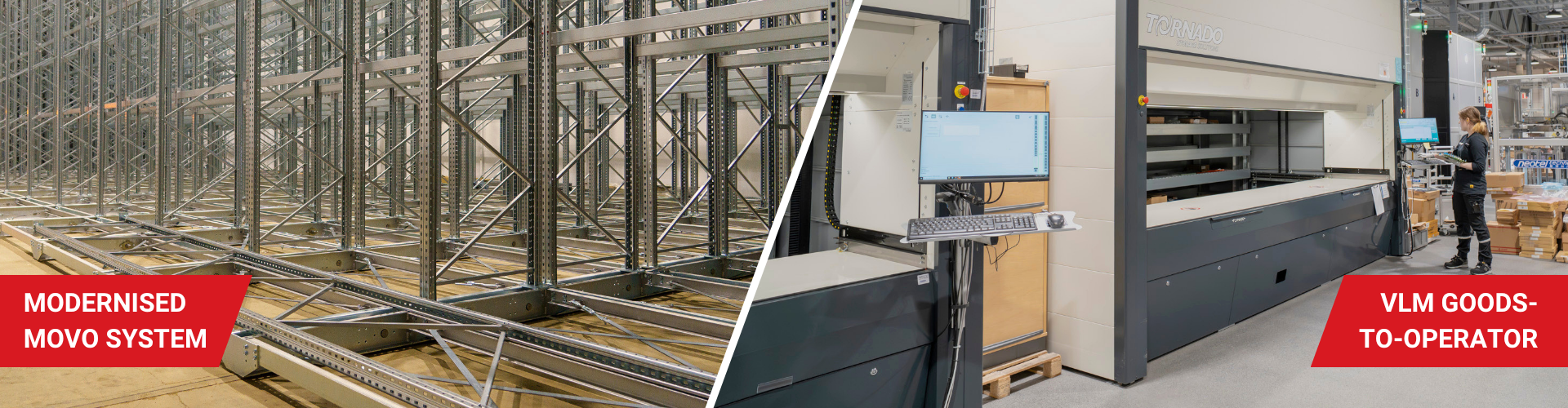
All help to reduce travel time and improve picking efficiency. In a labour-constrained environment, reducing unnecessary movement is not just an efficiency gain, but a competitive advantage.
The Cost of Working Around Limitations
Another hidden inefficiency is the reliance on workarounds. Legacy systems often require teams to compensate by using temporary storage zones, manual handling where automation could assist, and informal processes to bridge gaps in the layout.
Over time, these workarounds become embedded in daily operations. They begin to feel normal. But they are a clear signal that the system is no longer aligned with operational needs. What is often overlooked is the compounding costs for increased labour, reduced consistency and higher errors.
Upgrading is not just about improving your systems; it's also about eliminating unnecessary workarounds altogether.
The Cost of Wear, Damage & Downtime
As warehouse systems age, maintenance trends begin to shift.
Repeated impacts in high-traffic areas, damage to racking uprights and beams, increasing repair cycles. These are not just maintenance issues they are also indicators of underlying inefficiency. They often stem from congested layouts, poor traffic flow and overextended systems operating beyond their original design.
If left unaddressed, these issues lead to increased operational downtime, higher repair costs, and greater safety risks. Modernisation, whether through targeted retrofits or system upgrades, can significantly reduce these pressures by aligning infrastructure with actual usage.
The cost of missed opportunity
Perhaps the greatest cost is the one that is hardest to measure. Legacy warehouses limit your ability to adapt. They make it harder to scale operations, introduce automation, and respond to changes in demand.
Meanwhile, competitors investing in modern warehouse solutions are moving faster, operating more efficiently, and creating capacity without expanding their footprint. In this context, standing still is not neutral. It is a form of decline.
From hidden cost to measurable gain
The challenge for many organisations is not recognising that inefficiencies exist. It is understanding where they are and how much they are costing - this is where a structured warehouse review becomes invaluable.
By assessing your current layout, storage systems, and operational flow, it is possible to:
- Identify underutilised space
- Pinpoint inefficiencies in picking and movement
- Highlight opportunities for high-density storage or automation
- Build a clear roadmap for improvement
In many cases, the gains are not marginal. They are transformational.
Take the next step
If your warehouse is still relying on legacy systems, the question is not whether inefficiencies exist. It is how much they are costing you.
A professional review of your existing warehouse setup can uncover hidden inefficiencies and identify practical opportunities to improve capacity, efficiency, and performance. Whether that involves mobile racking, VLM systems, or a broader retrofit strategy, the first step is understanding where you stand.
Book a warehouse review today and turn hidden inefficiencies into measurable gains.