Capacity is where these inefficiencies become impossible to ignore; sooner or later, every operation reaches that moment. The warehouse feels full. Not just busy but constrained. Storage spills into temporary areas. Access becomes more difficult. Productivity slows, even if only marginally at first.
The default response is often the same: "We need more space". But in many cases, that is the wrong conclusion.
The Illusion of a "full" warehouse
Most warehouses that claim to be running out of space are not always actually full to capacity. They're just not using their capacity efficiently.
If you walk through an older or legacy facility, you will spot giveaway signs of inefficiency. These include unused vertical space, wide aisles designed for bulky, older equipment, storage layouts that no longer match demand, and fixed systems that can't adapt to changing stock profiles.
Individually, these choices made sense at the time. But as operations evolve, they quietly limit how much capacity the warehouse can actually deliver. What looks like a space problem is often a design problem. Expanding the building may solve it temporarily, but it does nothing to address the underlying inefficiency.
Reclaiming space starts with rethinking design
Increasing warehouse capacity without expansion begins with a mindset shift. Instead of asking “how do we add more space?”, the better question is: “How do we use the space we already have properly?”
This is where warehouse layout optimisation and retrofit thinking come back into play.
Simple changes can deliver meaningful gains:
- Reconfiguring storage zones around demand
- Reducing travel distance between picking and packing
- Aligning high-frequency items with high-access locations
But these changes can only go so far. To unlock significant amounts of capacity, systems themselves often need to change.
Choosing the right way to unlock capacity
Once you move beyond layout improvements, warehouse capacity becomes a question of which system best solves the underlying constraint.
Not every operation has the same problem. Some are limited by space density, others by accessibility, speed, or SKU complexity. The right solution depends on what is actually holding performance back.
When density is the issue
In pallet-heavy environments, the biggest limitation is often the amount of floor space used for aisles. Traditional racking requires fixed access routes, meaning a large portion of the warehouse is not storing anything at all.
High-density solutions such as mobile pallet racking systems directly address this. By allowing aisles to open only when needed, systems like MOVO significantly reduce wasted space and increase storage density within the same footprint.
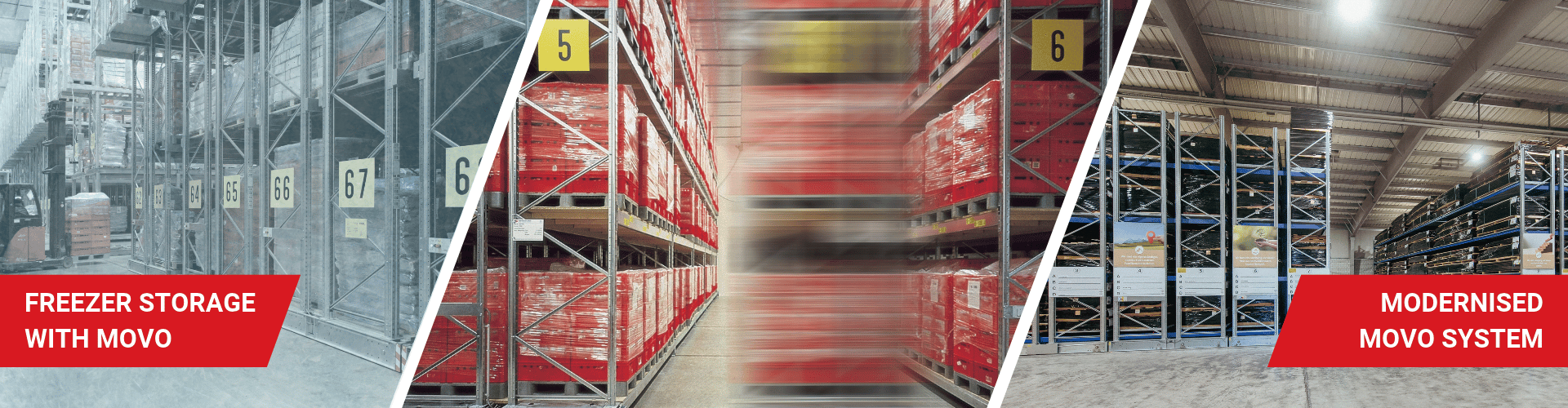
This approach is particularly effective where:
- Space is constrained
- Storage capacity needs to increase quickly
- You're storing in fridge/freezer environments
- Expansion is not an option
The impact is often immediate and measurable.
When vertical space is being wasted
In many warehouses, the real limitation is not floor space, but height. Racking systems are frequently constrained by legacy design decisions, leaving large volumes of vertical space unused. This creates an artificial ceiling on capacity.
Vertical Lift Modules (VLMs), such as Tornado or GonvaLift, take a different approach. They use automated vertical storage to condense goods and deliver them directly to the operator.
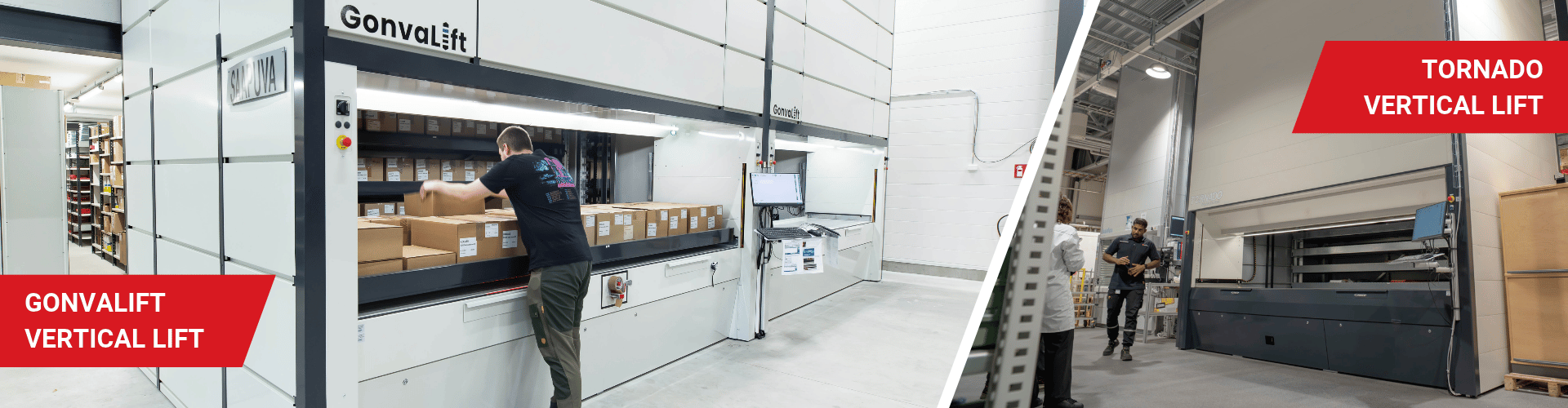
This makes them especially effective for:
- Small parts storage
- High-SKU environments
- Operations where picking efficiency is critical
They not only increase storage capacity but also reduce travel time and improve operator productivity.
When access and speed are critical
For operations where throughput and rapid access are priorities, capacity is not just about how much you can store, but how efficiently you can retrieve it.
This is where high-density storage systems come into play:
VNA pallet racking increases storage density by reducing aisle width while maintaining direct access to each pallet. It offers a balance between capacity and selectivity.
Shuttle systems, by contrast, are designed for high-volume environments. By automating pallet movement within the racking structure, they maximise storage density while supporting fast, repeatable handling.
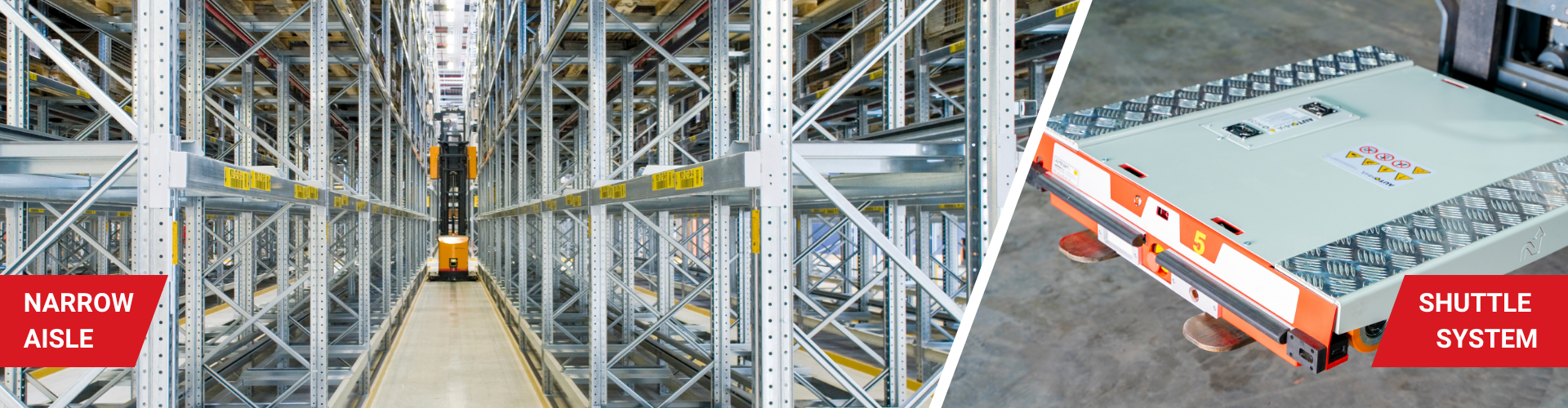
These systems are typically suited to:
- High-throughput operations
- Predictable stock profiles
- Environments where speed and scale matter
Capacity and efficiency are the same problem
One of the most common mistakes is treating capacity as a storage issue alone. In reality, capacity and efficiency are closely linked.
A poorly optimised warehouse:
- Stores less than it could
- Moves more than it should
- Relies more heavily on labour than necessary
Simply adding storage without addressing flow, access, and system design often shifts inefficiency rather than eliminating it. This is why the most effective capacity improvements come from aligning systems with how the warehouse actually operates today, not how it was originally designed.
Why expansion should be the last option
Expanding a warehouse is expensive, disruptive, and slow. In many cases, it is avoidable.
Optimising layout, introducing high-density storage systems to make better use of vertical space, and selecting technology for your operations can help your business unlock significant additional capacity within your existing footprint, not incrementally but in ways that materially improve warehouse performance.
From constraint to opportunity
When a warehouse starts to feel constrained, it is often seen as a limitation. In reality, it is one of the clearest indicators that improvement is possible.
Capacity pressure highlights where space is being wasted, where systems are no longer fit for purpose, and where operations have outgrown their design.
Handled correctly, it becomes a starting point for meaningful optimisation, not merely expansion.
Take the next step
If your warehouse feels full, it is worth asking whether it is truly at capacity or simply not operating at its full potential.
A structured warehouse review can identify where space is being lost and which solutions will deliver the greatest impact, whether that involves mobile racking, vertical storage systems, or a broader retrofit strategy.
Book a warehouse optimisation review to uncover hidden capacity in your operation.